COMBINE 2026
Conference Date
7 - 10 September 2026Conference Location
Keele University, UKImportant Dates
Standard and student registration closing date (in-person)
2 August 2026Late standard and student registration closing date (in-person)
23 August 2026Virtual registration closing date (virtual)
3 September 2026Talk, lightning talk and poster submission deadline
19 July 2026Breakout and tutorial submission deadline
19 July 2026Notification of acceptance for talks, lightning talks and posters
26 July 2026Notification of acceptance for breakouts and tutorials
26 July 2026Important Links

The “Computational Modeling in Biology” Network (COMBINE) is an initiative to coordinate the development of the various community standards and formats in systems biology, synthetic biology and related fields. COMBINE 2026 will be a workshop-style event hosted at Keele University, UK.
Local organisers are Goksel Misirli, Metehan Unal, and Roberto Galizi.
Confirmed Invited Speakers
- Geoff Baldwin, Centre for Engineering Biology, Imperial College, UK
- Rahuman Sheriff, European Bioinformatics Institute, European Molecular Biology Laboratory (EMBL-EBI), UK
- Gary Mirams, Centre for Mathematical Medicine & Biology, University of Nottingham, UK
Workshop Location
COMBINE 2026 will take place at Keele University in Newcastle under Lyme, Staffordshire, ST5 5NS, United Kingdom. The conference will be held at the Smart Innovation Hub (also known as Innovation Centre 6).The Think Lab (LG0.31) will be used as the main room on the lower ground floor. Please see the floor plan. A lift is available from the upper ground floor. The lower ground floor also has direct access from outside. Please contact us should you require assistance prior to your arrival.
In addition to the main room, three breakout rooms will be available after 12:00. All of the rooms are located on the lower ground floor.
- Open Innovation - LG.035 (up to 34 people)
- Executive Boardroom - LG.035 (up to 20 people)
- Boardroom - LG.036 (up to 14 people)
Schedule
The schedule will be available here.
Posters
The posters will be displayed on Monday, 7 Sep. A0 poster boards will be available in the Atrium. Please make sure to submit your poster abstracts.COMBINE Dinner
The registration also includes a three course banquet dinner, which will be on Monday at 19:00 and held in Salvin Room at Keele Hall (number 15 on the Keele campus map on page 3). Please advise the organisers if you have any allergies, intolerances or special dietary requirements, using the registration form.Arrival and Transportation
Please see the Delegate Information Sheet on page 2 for travelling to Keele. You will find information about the nearby airports, and getting to Keele by rail or car.Additional information can be found at:
https://keele-conference.com/delegates-visitors-how-to-get-to-keele/
The venue, Smart Innovation Hub, is marked as number 51 (close to the main university entrance) on the Keele campus map on page 3. The postcode for the building is ST5 5NS.
Parking
For those who plan to arrive by car, please see the car parking section on page 1. You must register your car prior to arrival at Keele. We will share a link for you to register your details closer to the event. If you have any questions, please contact the organisers.Once registered, car parking is available in Plot 7 , also known as A3 (see page 3 on the Delegate Information Sheet).
Accommodation
Some accommodation options are listed below. There are several other options available in Newcastle-under-Lyme and Stoke-on-Trent. Some of the nearby hotels:- Courtyard by Marriott Keele Staffordshire: The hotel is on campus and just opposite the venue. 95.00 GBP per night if you book using this link. This rate is valid for reservations between 6 and 10 September 2026. Number 45 (close to the main university entrance) on the Keele campus map on page 3.
- Holiday Inn - Newcastle under Lyme
- Travelodge - Newcastle under Lyme
- There are also other options, such as Premier Inn and Hilton.
MealsThe registration includes a two-course buffet lunch, which will be in the Atrium on the lower ground floor. Please advise the organisers if you have any allergies, intolerances, or special dietary requirements using the registration form. Tea and coffee will also be provided during the breaks.
There is also a small cafe on the lower ground floor, which offers a selection of teas, coffees, breakfast, lunch, snacks, and sweet treats.
For more options, please see below:
https://www.keele.ac.uk/study/student-life/campuscommunity/food-and-drink/restaurantsbarsandcafes/
https://www.keele.ac.uk/study/student-life/campuscommunity/food-and-drink/shopsandvending/
Power outlet
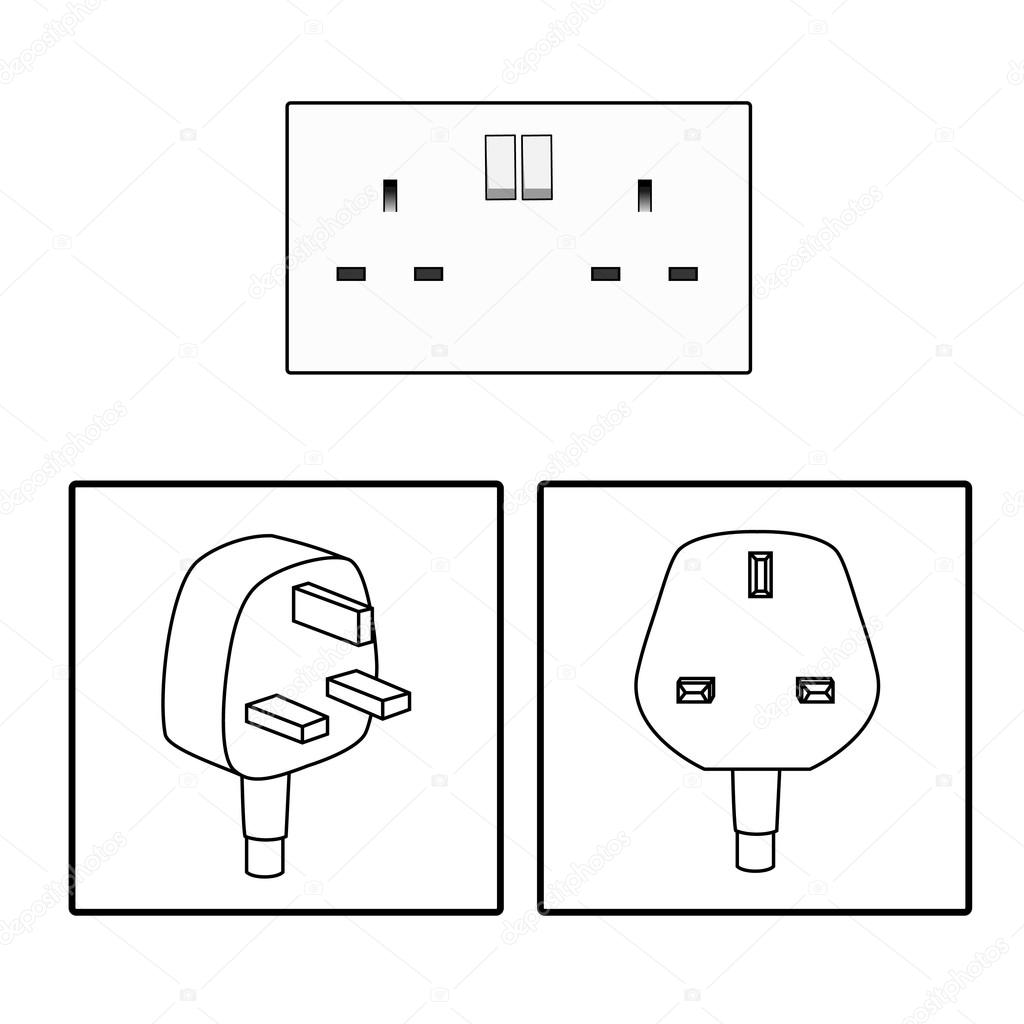
G-type plugs are used in the UK.
Visa
Please check here if you require a visa. If you need a letter to support your application, please contact the organisers. Additionally, if you need confirmation that a talk, poster, or breakout session will be accepted before the confirmation deadline, please contact the organisers.Anti-Harassment Policies
The COMBINE community is dedicated to providing a harassment-free experience for everyone, regardless of gender, gender identity and expression, age, sexual orientation, disability, physical appearance, body size, race, ethnicity, religion (or lack thereof), or technology choices. We do not tolerate harassment of participants in our meetings, email list, and other communication mechanisms in any form. Sexual language and imagery is not appropriate for any of these venues, including talks, workshops, parties, email lists, Twitter and other online media. Participants in our meetings and discussions violating these rules may be sanctioned or expelled from our mailing lists and our meetings without a refund at the discretion of the COMBINE coordinators. This policy is linked on the COMBINE website.Child Care Availabilty & Local Resources
COMBINE 2026 does not provide child care, however local resources for short-term child care may be available through childcare.co.uk, nannyjob.co.uk, or similar services. Additional information/resources will be shared as they become available.Support
We gratefully acknowledge the support of the Biotechnology and Biological Sciences Research Council (BB/Z517367/1), the School of Computer Science and Mathematics at Keele University, and the EU H2020 grant MSCA-RISE-2020-101008140-EffectFact.


Registration
Registration for the meeting is £300 GBP for standard attendees and £220 GBP for students attending in person. **After August 2nd, the late registration fees are £350 and £270 respectively. ** There is no registration fee for virtual attendees. Please register at the link above as soon as possible. This will help us plan the schedule and match your interests to the timing of the breakouts, etc. Note, only registered attendees will be sent information related to the meeting. The registration fee covers the lunch from Monday to Thursday and the COMBINE dinner on Monday.Call for Breakout Sessions and Tutorials
All attendees can suggest breakout sessions for hacking and/or detailed discussions of certain aspects of one or several of the COMBINE standard(s), metadata and semantic annotations (format-specific or overarching), application and implementations of the COMBINE standards, or any other topic relevant for the COMBINE community. The topics for those breakout sessions, and the time slots which would suit their communities can be submitted via the link above. Note, breakout session organisers will be responsible for creating and hosting their own online sessions, if required.Call for Talks, Lightning Talks and Posters
Requests for a short talk, lightning talk (5 min max.) and/or poster can be submitted via the link above. This link should also be used to submit the title and abstract for invited talks. Please use several forms if you want to submit abstracts on different topics. The submission deadline is outlined above. Talks will take place during the community session and posters will be displayed throughout the meeting.Topics of Interest
- Data exchange, pipelines and model standards for systems and synthetic biology
- Visualization and graphical notation standards for systems and synthetic biology
- Standards for sharing and analysing biological pathway data
- Standards for computational biological models and modelling support
- Metadata description and model annotation in COMBINE standard formats
- Implementation of COMBINE standards in tools, databases and other resources
- Integrated model and data management for systems and synthetic biology
- Standardization of Artificial Intelligence approaches in biological modelling
- Emerging standardization needs and multicellular modeling
- Community aspects of COMBINE